Jurisdiction:
South Korea
Organ System:
Breast
Funding Organizations:
- National Cancer Center, S. Korea
- National Research Foundation of Korea
Research Organizations:
- Yonsei University, S. Korea
- Kyung Hee University, S. Korea
- Kookmin University, S. Korea
Principal Investigators
:- Joohyuk Sohn
- Seho Park
- Heon Yung Gee
- Jong Bae Park
Publication:
External Links:
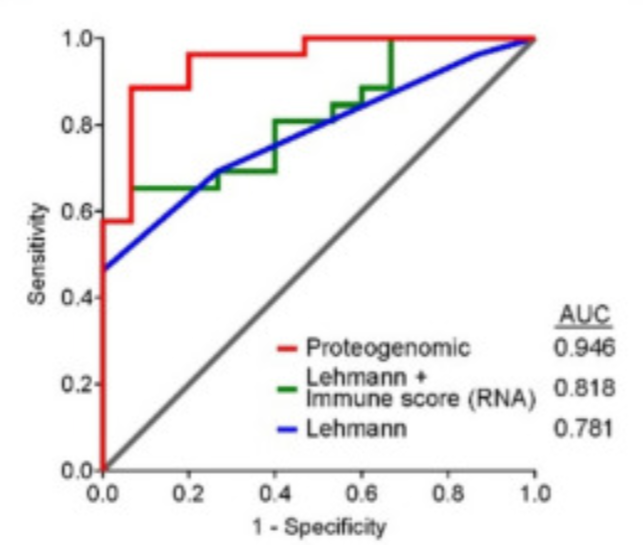
This study prospectively analyzed paired baseline and post-treatment tumor samples from 50 patients with stage II–III triple-negative breast cancer treated with anthracycline- and taxane-based neoadjuvant chemotherapy using integrated whole-exome sequencing, RNA sequencing, global proteomics, and phosphoproteomics. Multi-omics analysis identified five distinct proteogenomic subtypes associated with differential chemotherapy responses. The immune-enriched subtype demonstrated the highest pathologic complete response rates, while xenobiotic metabolism and epithelial–mesenchymal transition subtypes were strongly associated with chemotherapy resistance. Tumors achieving pathologic complete response showed enrichment of immune-related pathways, whereas resistant tumors displayed elevated epithelial–mesenchymal transition and estrogen response signaling. The study further identified potential resistance mechanisms, including estrogen-linked GRK2 activation, and uncovered biomarkers associated with treatment response, such as ITGB8 copy number loss and increased immune activation. Analysis of residual disease revealed activation of the AURKB pathway, with Aurora B kinase inhibition showing synergy with paclitaxel in vitro. Importantly, the integrative proteogenomic predictive model outperformed RNA-based approaches in forecasting chemotherapy response, providing a framework for biomarker-driven personalized therapeutic strategies in triple-negative breast cancer.