Jurisdiction:
United States
Organ System:
Stomach
Funding Organization:
- National Cancer Institute, USA
Research Organizations:
- Johns Hopkins University, USA
- Baylor College of Medicine, USA
- University of California, USA
- Broad Institute of MIT and Harvard, USA
- Washington University in St. Louis, USA
- National Cancer Institute, USA
Principal Investigators
:- Bing Zhang
- Hui Zhang
- Daniel W. Chan
- Lan Huang
- Ramon U. Jin
Publication:
External Links:
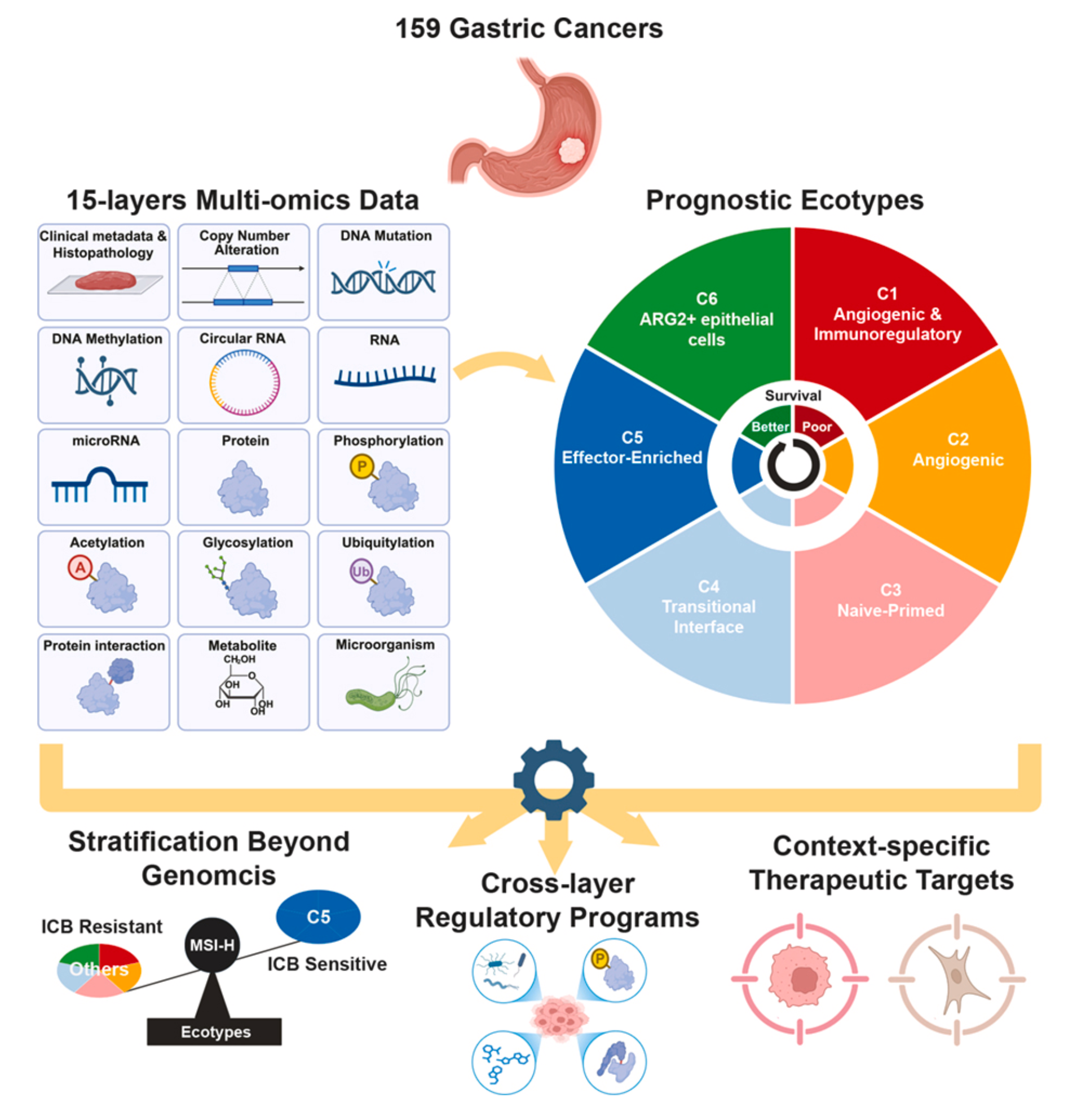
Gastric cancer is marked by profound molecular and microenvironmental heterogeneity that limits therapeutic progress. Here, we present a 15-layer multi-omics atlas that integrates genomics, epigenomics, transcriptomics, proteomics, multiple post-translational modifications (PTMs), protein-protein interactions, metabolomics, and microbiome profiles from 159 primary gastric adenocarcinomas and 30 matched normal adjacent tissues. Using cell-state deconvolution, we define tumor ecotypes that refine genomic and histological subtypes by capturing distinct tumor microenvironment architectures linked to clinical outcomes and potential associations with immunotherapy response. Multi-omics integration prioritizes genomic and epigenomic aberrations and their associated vulnerabilities; defines ecotype-specific transcriptional programs, signaling pathways, PTMs, protein interaction networks, and metabolic regulation; and identifies microbiome features linked to ecotypes and resistance pathways. We further prioritize ecotype-, genomic subtype-, and cell type-specific targetable proteins using proteomic and PTM analyses within a tumor microenvironment context. This comprehensive atlas provides a systems-level blueprint for decoding gastric cancer heterogeneity and advancing precision oncology.